
|
|

Living Values Education is gradually expanding in India.
We now have five cities operational offering individual reports:
India | Mumbai ~ Goa ~ Ayodhya ~ Bengaluru ~ Erode
2025
A Reflective Report on the Value of Respect
Date: 23rd November 2025
Location: Peace Cottage, Betalbatim, Goa
Facilitator: Anjescia Rodrigues
You can download a pdf of this full report here.
SELF-RESPECT: REACT LESS = INCREASE SELF RESPECT
What is self-respect?
- It is the foundation of our IDENTITY.
- We see our umpteen qualities and we understand our needs.
- If we fulfil our needs, we are confident in the moments of difficulty, we concentrate on how powerful we are.
- We regard ourselves positively and acknowledge our capabilities.
- Then we treat ourselves and others with consideration, kindness, empathy, dignity.
- It is a crucial value to shape our thoughts, actions, attitudes towards ourselves and others.
Some tools to improve our Self-Respect are:
Joining out hands first thing in the morning and connecting with the divine peace and power.
Let our light connect with the light of GOD.
Express appreciation for the limitless gifts we have.
Introduction
Respect is one of the most fundamental values that shapes human character, relationships, and society as a whole. It begins within the self and gradually extends to others through thoughts, actions, and attitudes. Self-respect forms the foundation of identity and influences how individuals respond to challenges, interact with others, and make fair judgments. This report explores the value of respect through four key points derived from self-respect: identity, understanding one's qualities and needs, inner power and humility, and wisdom in treating others fairly.
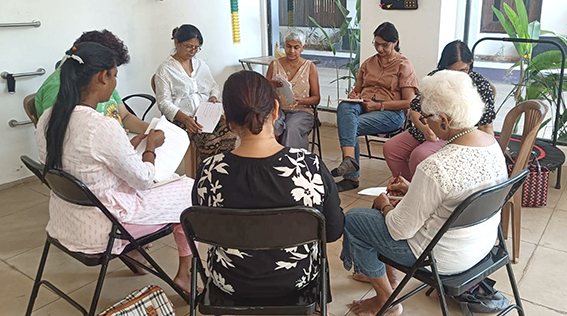
The methodology for this workshop involved writing and reflecting on my own qualities, strengths, and areas of growth. By acknowledging who I am, what I value, and how I respond to situations, I was able to understand that self-respect is deeply connected to self-awareness. This reflective practice helped me realize that respecting myself does not mean reacting impulsively, but rather responding with calmness, understanding, and dignity.
Through daily reflection, gratitude, and conscious behavior, I observed how self-respect influences my thoughts, actions, and interactions with others. This method aligns with the idea that self-respect grows when we react less, act with humility, and stay connected to inner values such as peace, fairness, and empathy.
Key Insights
Through this reflection, it became clear that self-respect is deeply rooted in self-awareness and understanding one’s own qualities. Knowing my strengths and needs helped me realize that reacting less increases inner strength and emotional stability. Self-respect, when practiced with humility, develops inner power and wisdom, which in turn shapes fair judgment and respectful behavior towards others. I also gained the insight that respect cannot be demanded; it is naturally received when we respect ourselves and act with dignity, empathy, and integrity.
Feedback:
This reflection highlights the importance of continuing self-observation and conscious practice of self-respect in daily life. There is a need to further strengthen humility, patience, and empathy, especially in challenging situations. By regularly reflecting on my actions and responses, I can improve my ability to judge fairly, communicate respectfully, and maintain emotional balance. Consistent practice of these values will help deepen self-respect and positively influence relationships with others.
Through reflection, I learned that respecting myself means remaining calm, patient, and composed even when faced with negativity. This calmness reflects inner power. When humility is practiced, individuals listen more, judge less, and respond with empathy. As a result, relationships become healthier and more respectful. Respect cannot be demanded; it is earned through consistent behavior. When we respect ourselves, set healthy boundaries, and act with integrity, others begin to recognize and reciprocate that respect. Humility allows us to remain open to learning, while self-respect ensures that we do not compromise our values. Together, they create a powerful foundation for personal and social respect.
Conclusion
The value of respect begins within the self and extends outward to others. Through self-respect, individuals build a strong identity, understand their qualities and needs, develop inner power through humility, and gain wisdom to judge others fairly. The methodology of self-reflection and writing personal qualities revealed that knowing oneself is essential to cultivating self-respect. When we respect ourselves, we react less, act with dignity, and maintain inner peace. This inner balance naturally attracts respect from others. Respect, therefore, is not merely a social value but a personal practice that shapes character, relationships, and society. By nurturing self-respect, we contribute to a more compassionate, fair, and respectful world.
________________________________
Understanding Peace from a Spiritual Perspective
Location: Peace Cottage, Betalbatim, Goa
Facilitator: Anjescia Rodrigues
You can download a pdf of this full report here.
Introduction
Peace is often understood as the absence of conflict, but from a spiritual perspective, peace is a deep inner state of harmony, awareness, and acceptance. The workshop on the Value of Peace invited participants to explore peace not as something external to be achieved, but as an inner quality to be experienced, nurtured, and lived. Through LVE self-reflection and guided sharing, the session emphasised how inner peace influences our thoughts, actions, relationships, and the environment around us. Understanding peace at this level allows us to respond to life with greater clarity, gentleness, and love.
Methodology
The workshop adopted a reflective and experiential approach. Participants were guided through moments of silence, self - reflection and inward attention to connect with their inner state. Gentle discussions encouraged sharing personal insights on peace, while guided reflections helped participants observe their thoughts, emotions, and reactions. The methodology focused mainly on self-reflection, going inward, and mindful awareness, allowing each individual to discover what peace truly means to them rather than imposing a fixed definition.
Key Insights
A main insight from the workshop was that peace begins within. When we cultivate inner peace, we become more grounded and present in our daily lives. This inner grounding creates a natural sense of gentleness towards ourselves and others. Participants reflected on how peace shifts reactions to response & reduces inner unpleasantness and brings a more loving quality to thoughts, words and actions.
Another important realisation was that peace has a ripple effect. When we operate from a peaceful inner space our surroundings also feel calmer and more harmonious. Peace supports us in facing challenging situations with balance and understanding rather than fear or reactivity. By practicing self-reflection and consciously going inside we learn to respond thoughtfully, allowing wisdom and compassion to guide our choices even in difficult moments.
Feedback and Reflection
Participants expressed that the workshop offered a safe and nurturing space to slow down and reconnect with themselves. Many shared that the experience helped them recognise peace as a practice rather than a destination. The gentle approach encouraged openness, emotional clarity, and a deeper appreciation of how inner peace transforms daily living.
Overall, the workshop was received as a meaningful and grounding experience that inspired participants to integrate peace into their everyday lives, through self-awareness and mindful reflection for a peaceful outcome in every challenging situation.
________________________________
Report of the Value of Responsibility
Location: Peace Cottage, Betalbatim, Goa
Facilitator: Anjescia Rodrigues
You can download a pdf of this full report here.
Doing One's Share through Awareness and Self-reflection
1. Introduction
Responsibility, from a deeper and more conscious perspective, is not merely about fulfilling duties or meeting external expectations. It is about accepting what is required of us and carrying out our tasks to the best of our ability, while remaining aligned with our inner values. The workshop on the Value of Responsibility created a reflective space for participants to explore responsibility as a personal and spiritual quality, one that begins with the self and naturally extends to relationships, work, and society.
The session emphasized that every individual has something worthwhile to offer. When responsibility is understood in this way, it becomes empowering rather than burdensome. Participants were invited to look inward, recognize their role in shaping their inner and outer worlds to find balance in how responsibilities are perceived and lived. Through self-reflection and shared understandings, the workshop encouraged participants to view responsibility as a conscious choice rooted in awareness, self-respect and inner honesty.
2. Methodology
The workshop followed an experiential and reflective methodology designed to achieve personal insight rather than provide fixed answers. A key component of the session was guided self-reflection, where participants were invited to pause, observe, and engage in an honest inner dialogue. Reflection questions encouraged individuals to examine how they relate to responsibility in daily life, towards themselves, others and external circumstances.
Participants were guided through activities that focused on personal conversations with the self, helping them become aware of the quality of their inner dialogue. Group sharing allowed individuals to express insights, challenges, and realizations in a supportive environment, reinforcing the understanding that each person perceives their own world uniquely. The methodology emphasized mindfulness, inward observation, and conscious awareness, enabling participants to identify imbalances and recognize areas where responsibility could be embraced with greater clarity and compassion.
3. Key Insights
One of the most significant insights from the workshop was that responsibility begins within. Before we can take responsibility for external roles and tasks, we must acknowledge our responsibility towards our own thoughts, emotions, and inner conversations. Participants reflected on how much they owe themselves during moments of personal dialogue, how they speak to themselves, especially in times of difficulty or self-doubt.
A recurring theme was the importance of making inner conversations positively affirmative. Many participants became aware that their daily self-talk often includes doubt, guilt, suppressed emotions, or self-criticism. These inner patterns can quietly shift one from a sense of 'right' into a feeling of being 'wrong', creating emotional imbalance. Recognizing this was a powerful moment of awareness, highlighting that responsibility also means being conscious of the emotional and mental environment we create within ourselves.
Another key realization was that appreciating oneself is an essential aspect of responsibility. Participants reflected on whether they consciously acknowledge their efforts and contributions, or whether they overlook them due to ingrained habits of self-judgment. Taking responsibility, in this sense, means honoring one's efforts, learning from mistakes without self-blame and responding to inner challenges with understanding.
4. Feedback and Reflection
Feedback from participants indicated that the workshop provided a meaningful opportunity to slow down and examine their relationship with responsibility at a deeper level. Many expressed that the self-reflection questions helped them recognise unconscious patterns of self-talk and emotional suppression that influenced their sense of responsibility and self-worth.
Participants appreciated the non-judgmental and supportive space for sharing, which allowed them to openly explore doubts, guilt, and inner conflicts without fear. Participants realized that the session helped them reframe responsibility as an act of self-care and self-respect rather than obligation alone. The workshop was described as thought-provoking, grounding and empowering, encouraging participants to continue practicing conscious self-reflection and positive affirmation in their daily lives.
Overall, the workshop on the Value of Responsibility was received as a transformative experience that deepened participants understanding of responsibility as a lived value, one that begins with awareness, is nurtured through inner honesty and is expressed through mindful action. By embracing responsibility in this holistic way, individuals are better equipped to contribute positively to their own lives and to the world around them.
________________________________
Nurturing values into daily life through reflection and creative art
Date: 3 April 2025
Facilitator: Anjescia Rodrigues
You can download a pdf of this full report here.
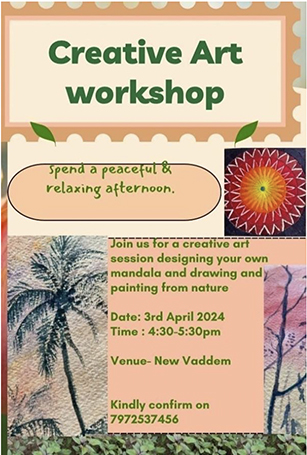
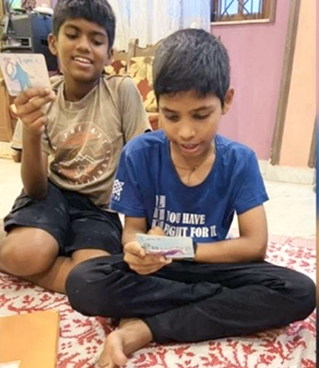
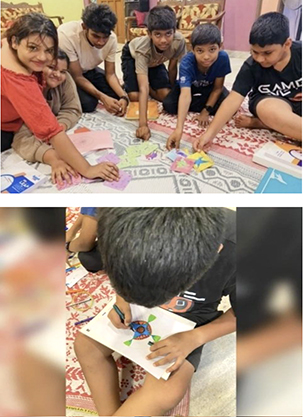
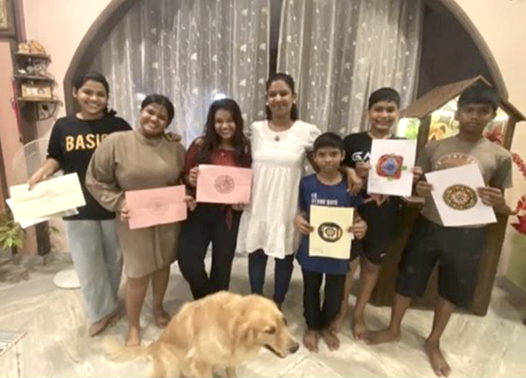
On 3rd April, a workshop was conducted for children aged 10 to 18 from the Catholic community with the aim of helping them understand, reflect on values into their everyday lives. The session combined value-based discussions with a creative Mandala art activity to foster mindfulness, self-expression, and emotional well-being. The workshop sought to inspire children to live with confidence, happiness, and self-love, while discovering the joy of creativity and inner peace.
Many children reflected on values for the first time, which brought excitement, curiosity, and thoughtful engagement.
- The activities helped them understand how values like inner peace, respect, self-love contribute to becoming better human beings.
- The Mandala session created a meditative experience, helping the participants experience stillness, focus, and peace.
- The workshop successfully linked spiritual reflection with creative expression, allowing children to realise that values can be lived and practised through small daily actions.
Feedback and Outcomes
- Participants shared that the workshop made them feel peaceful, happy, and more connected to their inner selves.
- Many expressed a strong desire to attend similar sessions in the future, as the experience helped them explore mindfulness and creativity in a meaningful way
- The children reported feeling a renewed sense of purpose and calm, with motivation to apply values like self-love, peace, unity and respect in their daily lives.
- Overall, the workshop was a success, creating a positive and values-based environment that encouraged reflection, creativity, and emotional growth.
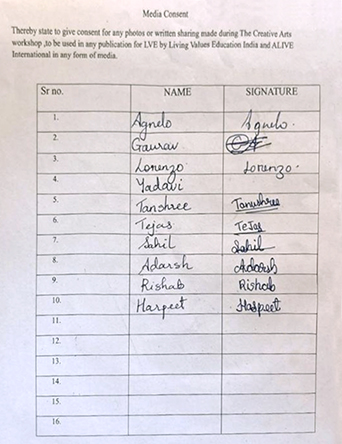
Media Consent
________________________________
Living Values Education (LVE) at Ameya
Facilitator: Jacqueline Fernandes
You can download a pdf of this full report here.
Ameya is a community-driven initiative in Goa, India dedicated to promoting healthy aging and overall well-being among seniors, their family and community members. Ameya places seniors as pillars of hope and agents of change, assisting them in strengthening their position at the top of the social pyramid and co-creating tomorrow’s future by positioning them as guardians of wisdom, culture and stability, rather than mere dependents in a modern world.
Ameya gives value to the wealth invested in Seniors, caring for them as treasures, harnessing their knowledge and experiences, forging a community that is safe, welcoming, filled with love, laughter, compassion and empathy that nurture togetherness, fostering seniors as valuable assets to society.
The Ameya programme was founded on the 7th January 2025 under the guidance and generous support of Eleanor Viegas and Jacqueline Fernandes and other volunteers namely Anjescia Rodrigues, Rahana and Zaira Mirza, and started at Peace Cottage in Betalbatim, Goa.
From the onset, an important influencing factor that gave structure and form to Ameya was its immersion with Living Value Education (LVE) dedicated to 'nurturing hearts and educating minds' and highlighting importance of learning to be and learning to live together. Ameya coincides with the LVE ethos and uses LVE tools and materials to bring people together to Explore, try new Experiences and connect with/Express their hidden wealth of values, qualities and talents within themselves and within each other in a collective way.
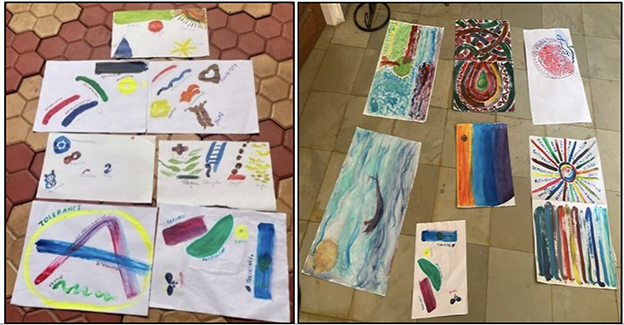
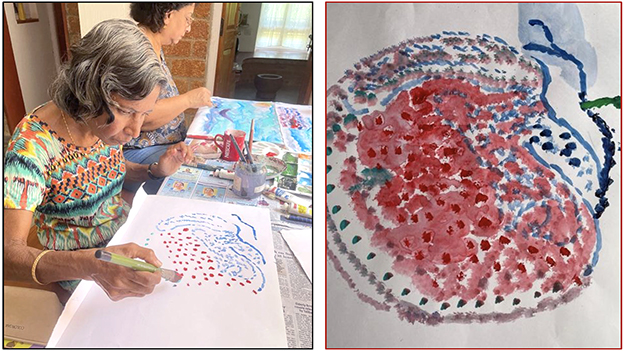
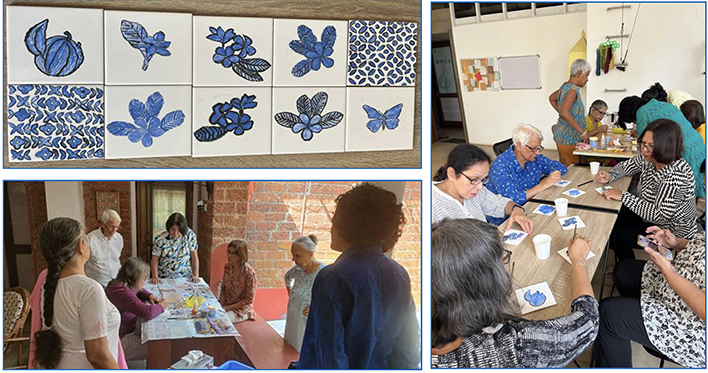
Exemplary activities of the Values in Art Workshop for Senior Citizens were conducted on the 24th September 2025, at Peace Cottage by Eleanor Viegas:
On a large sheet of paper, participants were asked to make marks on the paper that expressed different qualities like GENTLE, STRONG, TOLERANCE, DETERMINATION, PEACEFUL, using 3 primary colours. Painting the quality was a mind-blowing experience. A sense of calm prevailed and it set the mood for the next part of the session. In the next part, the participants had to make a variety of marks using the 3 primary colours, such that the entire paper was covered, but not think too much. The finished paintings were all very different.
Everyone felt relaxed yet very concentrated. The participants were asked to express their feelings and answer reflective questions. They enjoyed sharing their points of view with others.
The initial workshops concentrated on artistic expression through drawing, painting, needlework and marbling, facilitated by Eleanor Viegas (methodology explained above), as well as pottery by Nandini Datta. Seniors were encouraged to work spontaneously without thinking too much. They were empowered to connect with and express their inner beautiful selves, acknowledging and building new strengths and skills, making meaning of experiences, personal growth, talent and inner creativity. Art class is instrumental to achieve a meditative state whilst reaching into the inner depths of values and talent, building confidence and bringing a satisfying and positive feeling.
Further workshops in expressive art engaged seniors to make art and craft together, have much fun, build concentration in the working process, exposure to new materials and techniques, exploration of hidden talents, fostering communication, collaboration and appreciation in each other. All-in-all seniors were happy from a sense of self-accomplishment, social engagement and sharing.
Art Expression helps to reach the inner depths of values and talent
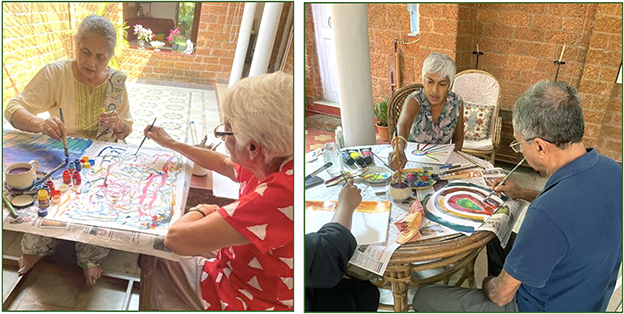
The workshop helped senior citizens to get in touch with the inner artist and at the same time introduce them to Living Values. During other meetings, the different VALUES explored were LOVE, PEACE, HAPPINESS.
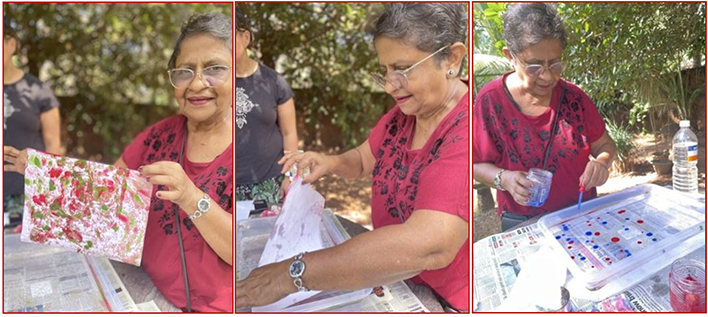
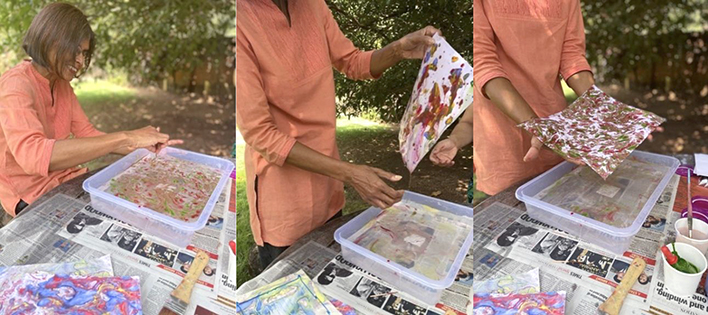
Seniors experiment with Marbling
Pottery with Nandini Datta
Another fabulous activity focuses on mindfulness and an inward journey into the strengths and core of personal and social values of Love, Happiness, Peace, Respect, Freedom, Responsibility and Tolerance. Seniors were able to connect with their own hidden qualities, the foundation of their identity, become aware of self-worth and trust in others. With constant and dedicated facilitation of LVE practitioners (Anjescia Rodrigues, Eleanor Viegas and myself), the skill of how to keep generating positive and gratifying thoughts and be sensitive to others grow strong and deep. With continuous practice seniors develop skills that will help them in daily life setting, to care for their own well-being and mental health, fulfil their potential, realise their dreams, and contribute to their community with dignity, respect, self-confidence and purpose. With increased faith and courage, seniors will co-create a bright, peaceful future for the world as torchbearers of values in their community and in the world, inspiring their peers to create a calm value-based atmosphere where new learning and good health become a standard.
Fitness is an integral part of LVE. It includes meditative exercises like yoga and breathing, brain-gym, together with dancing, Taichi as well as music, singing and laughter.
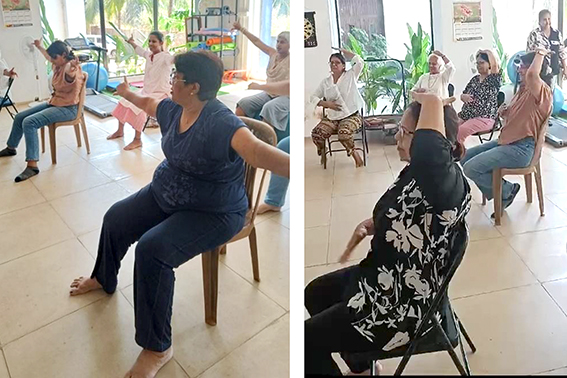
The Outcome of creative stimulation with non-verbal expression, emotional release, cognitive stimulation, movement therapies and social engagement, is remarkable resulting in increased peace and productivity as well as mutual trust and discipline in Seniors. Noteworthy is the focus shifting from senior challenges of loneliness, boredom, loss of function and ability, mental distress and resignation, towards creating avenues for engagement, learning, purpose, community interaction whilst boosting emotional, mental, physical and spiritual aspects of health, well-being and independence of seniors.
Next Steps / Way Forward
The way forward is:
• to expand Living Value Education through Ameya and collaborative efforts with the youth of Goa.
- Create a buddy system with Ameya Seniors that includes the youth. This involves collaborating with LVE to realise the Youth Leadership Programme in Goa using a proposal already written and developed by ALIVE Board Member, Helen Sayers, for the same.
• to address the following challenges in the best way forward:
- Driving a mindset that allows us to put intention in to anything we do. When we have intention, we believe in ourselves, our capabilities and especially we feel the support of our Creator in this earthly journey.
- LVE is difficult in large groups. We are in a process of activating a buddy system and making smaller groups so that every member has a feeling of belonging and calmness necessary to visualise and feel the goodness inside.
- Elaborate and support the Buddy System between Ameya Seniors so that they can interact outside the workshop, be engaged and socially active and eliminate the scars of loneliness and isolation.
Closing Reflections
Living Values Education is as its name suggests - it does not stop at the workshops and meetings. LVE is a journey where members slowly build up a mindset that is powerful and peaceful. They start to believe in themselves and their connection with God is activated. This belief becomes so automatic that it kicks in when there is most need to be strong, centred, faithful and positive in the face of challenges.
________________________________
We have had some beautiful feedback of Living Values by our team in Goa:
 Feedback from Percy Cardozo, a psychologist with more than 30 years of experience of working on mental health, with a short video of Anjesica Rodrigues, our team member in mid twenties speaking about the importance of Living Values.
Percy has played a significant role in the development of Living Values Education in India.
Does Living Values Education (LVE) intersect with mental health?
I found myself drawn to its core principles - not just as abstract ideals but as practical tools for fostering emotional resilience, self-awareness, and inner balance. My introduction to LVE happened in an unexpected yet deeply reflective space - Peace Cottage, a serene haven in Goa, where meaningful discussions are facilitated by Eleanor Viegas, who embodies the very essence of peace.
Eleanor is a quiet yet steady presence, encouraging us to recognize our strengths and harness our inner potential. Through these conversations, I began to see how LVE’s core principles - peace, respect, love, responsibility, happiness, cooperation, humility, honesty, simplicity, freedom, tolerance, and unity - are not just concepts to aspire to but deeply practical tools for personal growth and therapeutic practice. The more I engaged, the more I understood how values shape resilience, emotional regulation, and self-awareness, both in my own life and in my work.
Today’s session, facilitated by Anjesica, was a deeply reflective discussion on self-respect - a concept that seems simple but holds profound depth. While psychology defines it in terms of self-worth, dignity, and confidence, our conversation explored its deeper layers. My co-participants shared insights on how self-respect influences our responses to hurt, balances our ego, and helps us decide when to let go and find peace. Eleanor, in her gentle way, reminded us that true understanding evolves with life’s experiences, unfolding with time and wisdom.
After the session, I spoke with Anjesica about her journey with LVE. She shared how values are not just ideals but guiding forces that help us maneuver life with clarity and awareness. Her introduction to LVE came during her college years, when she sensed a need for something deeper beyond everyday distractions. Over time, she realized that living values is about tuning in to oneself, recognizing inner strengths, and finding balance. She described values as quiet anchors, steadying us through life’s uncertainties and transforming experiences into wisdom.
A conversation worth participating, it left me thoughtful - reminding me once again that values are not just something we teach or discuss, but something we live.
Click here to watch the full video on our YouTube channel.
2024
Living Values Educators training - February 5 & 7, 2024
Living Values Education India acknowledges Percy Cardozo (Project Lead, Inclusive Education Projects, Sangath), Genesis D’Silva (Manager, Adarsh V.V. High School) and Svetlana Borges (Principal, Adarsh School) for their support in bringing together 27 teachers from 27 schools around South Goa for a two-day experiential workshop on creating a values-based atmosphere. The workshop took place at Adarsh V. V. High School on 5 & 7 February 2024.
This collaboration enabled us to sow the seeds of LVE with its unique approach ('Explore, Experience, and Express' our universal values) and offering ways for the teachers to creatively introduce values in their teaching.
Sangath is a non-governmental, non-profit organisation with primary focus areas in child development, adolescent and young health, and mental health.
Through various reflective activities, games and small group discussions, teachers explored the needs of a child and how to create a values-based atmosphere, contributing to the holistic development of a child. The sessions on active listening, conflict resolution and lifeskills provided teachers with tools to deal with some of the many challenges they face - in their personal development, and in their interactions with children and parents.
LVE India trusts that the experience of this unique workshop will remain etched in the teachers’ hearts forever and will serve as an impetus for more such LVE workshops in the future. Through this beautiful collaboration with Sangath and Adarsh V.V. High School, we envisage further sowing of the seeds of human values in the schools of South Goa which will bloom into beautiful trees contributing to the overall human development index of Goa.
We invite you to view the full video report on our YouTube Channel here.

Noticing each others qualities through their words and their eyes

Sharing and discussing visions

Discussing the basics needs of a child


Activity in active listening


Activities to develop harmony, cooperation, attention, discipline and coordination

2023
Living Values Education Activities in Goa, March 2023
Helen Sayers's visit to Goa was an enriching experience for all. She interacted with teachers and NGO representatives who were eager to learn more about Living Values Education.
LVE workshop for staff at the Bookworm Library, Panjim, Thursday 2 March
Established in 2005, this is an award-winning library and registered non-profit organisation promoting stories and love for books. 'Our vision is to inspire and develop a love for reading as a way of life, nurturing humane engagement in every girl and boy'.
Feedback
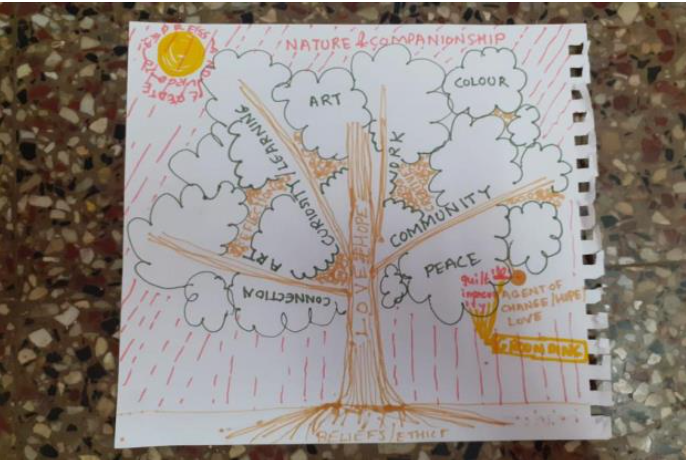
It was an enjoyable workshop held by Helen Sayers on living values education which helped us a lot. The manner in which the session was conducted allowed us to reflect deeply on several values. The introductory 'visiting card' activity allowed us to interact with each other and share how we feel about another person and the qualities we observed in them. I also appreciated a creative exercise which enabled us to think about values using the parts of a tree as metaphors for certain aspects of our lives. There is a lot of potential to explore this segment in the school.

Follow-up workshops for facilitators who attended TTE training workshop in 2022
Several TTE participants came together for a number of half-day workshops at Peace Cottage, a beautiful venue where they were warmly invited by host Eleanor Viegas who has been supporting LVE activities for over ten years. The sessions were designed to reinforce the skills and application of values that had been explored at the TTE, to encourage participants to share their experiences in the field, and to provide additional support and imagine new horizons together.
Feedback
The session at Peace Cottage on 3rd March was an in-depth learning experience. Sharing of a variety of challenges faced professionally and in daily life were discussed. Values contribute to provide us with the required strength, spark and positive energy to overcome and face difficult times. Helen shared values-based anecdotes, stories and experiences that were extremely inspiring, empowering and motivating. The reflection time was a treat and a great boost, energising us from within. We left the session feeling valued and enriched.
Brenda D'Cruz - LVE facilitator


The workshop I co-facilitated with Helen gave me an opportunity to reflect on my personal values observe how I am applying them. I experienced a safe and supportive environment and felt encouraged to share my thoughts and experiences without fear of judgement or criticism. Overall, living values sessions have been an enriching and rewarding experience for me , helping to deepen my understanding of my own values and develop practical skills for living those values in my daily life.
Anjescia Rodrigues - LVE facilitator


The LVE workshop touched base with our communication skills and how we can consciously work on improving them. We learnt that having values-based communication skills is highly likely to promote positive health for ourselves as well as for those around us. The practice session highlighted how a non-productive conversation can develop when we give too much advice, ignore, interrupt and criticise the other. The reverse is possible when we listen and speak with respect. The quality of our communication is directly linked with our own state of mind and vulnerability at the moment. Repeated practical sessions (started at Peace Cottage and then at home) drove this fact into my consciousness and I could mindfully guide myself in a positive direction and see my own values developing and changing the dynamics of any communication. The fantastic take home message from the workshop with Helen and Eleanor was that a Better Communication with others improves our own self-confidence and self-worthiness.
Jacqueline Fernandes - LVE facilitator
Helen asked us to spend time in silence in the garden looking for things that interest us and connect them to ourselves. Since I was attending the session with Nasya, my daughter, I could not move around the garden so I observed a tree and connected it to the different areas of my life: Roots being the values I have been brought up with and that I believe strongly in, moving deeper into the areas (soil) where I could get more knowledge (nutrients) to develop; Bark being the support system - my family and even Eleanor (Peace Cottage) which helps me stay strong and flourish; Stems - spreading my wings to different areas of life and spreading knowledge, guidance, love and values to others around me (moving towards different directions), it also resembled my students taking the knowledge ahead into the space and flourishing. The leaves are something that provide the tree with food - so this is related to LVE and my mentors who provide so much in terms of resources and help (food to our soul, mind and heart) that keeps us going; Flowers and fruits - the goals and achievements that we accomplished, the raw ones to remind me that I still need to grow in some areas to ripen (shine or be experienced) in those areas as it will require more time. The one that could not ripe or fell from the tree - giving me hope for improvement and accepting my failures; the buds - those dreams and achievements that are bidding up; the ones I need to be ready for as they could bring me new challenges, my dreams and achievements that I still need to work on and start planning to turn them into reality.
Anisha Rodrigues- LVE facilitator and coordinator