
|
|

Living Values Education is gradually expanding in India.
We now have five cities operational offering individual reports:
India | Mumbai ~ Goa ~ Ayodhya ~ Bengaluru ~ Erode
2025
Sri Vijaya Vidya Mandira, Vasanthapura, Bengaluru
Session 1 Conducted: 28th May 2025
Session 2 Conducted: 23rd August 2025
Location: Sri Vijaya Vidya Mandira, Vasanthapura, Bengaluru
LVE Facilitator: Vasupradha Venkatakrishnan
You can download a pdf of this full report here.
1. Background / Introduction
Shree Vijaya Vidya Mandira serves students coming from humble socio-economic backgrounds, where many parents have had limited access to formal education. Due to this context, teachers face significant behavioural challenges while engaging students in the classroom.
Over time, classroom management practices in the school had largely evolved into a fear-based control system, where discipline and compliance were maintained through authority, punishment, or fear. While this approach provided short-term control, it limited children’s emotional safety and did not support long-term character development.
Recognising this challenge, the school leadership felt the need to explore a values-based approach that could support positive behaviour, emotional well-being, and character formation in students. Living Values Education (LVE) was therefore introduced with the intention of gradually shifting the school environment from fear-based control to a value-based atmosphere, where children feel loved, valued, understood, respected, and safe, enabling them to thrive.
These sessions were conducted entirely under the Living Values Education framework and were not related to academics or curriculum delivery. The core agenda was to introduce and implement the Living Values philosophy and initiate a long-term cultural shift within the school.
The sessions were facilitated by Vasupradha Venkatakrishnan, representing Living Values India, and were designed as foundational interventions rather than short-term behavioural correction programmes.
2. Methodology
Both sessions followed the Living Values Education experiential and reflective methodology, which emphasises awareness, experience, reflection, and application rather than instruction or moral preaching.
- Session 1 was conducted primarily for teachers, focusing on awareness, reflection, and foundational understanding of values.
- Session 2 served as a continuation, involving the same group of teachers and extending the experience to three groups of students.
Across both sessions, the methodology included:
- Icebreakers and experiential activities
- Guided visualisation and reflection
- Facilitated group discussions and sharing
- Exploration of personal, social, cultural, and educational values
- Linking values to real classroom challenges
- Creating a safe, non-judgmental space for dialogue
The facilitator's role was to hold space, invite reflection, and gently guide awareness, recognising that meaningful change in deeply ingrained systems requires time and consistency.
3. Key Insights / Activities & Outcomes
* Session 1 - Awareness & Foundation (28th May 2025)
The first session focused on introducing teachers to the Living Values framework and initiating deep personal and professional reflection.
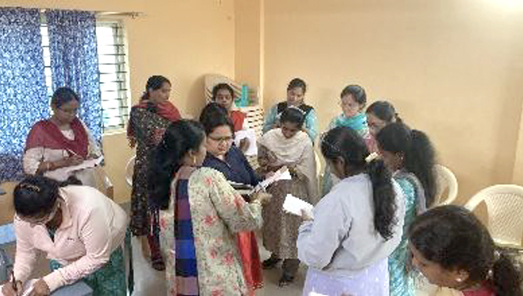
Key components included:
- Introductory "Visiting Cards" activity, which helped participants connect in an informal and engaging manner, setting the tone for openness and trust.
- Overview of Living Values Education (LVE), introducing its philosophy, intent, and experiential approach.
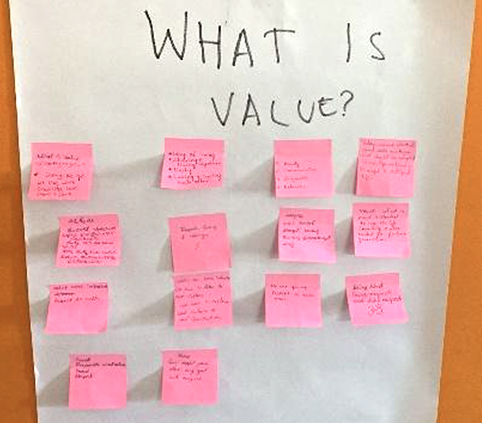
- Value Analysis, where participants explored:
- Personal values
- Social values
- Cultural and national values - Collective discussion to define what values are, grounded in lived experience.
- Exploration of creating a value-based learning environment, focusing on how values are reflected in daily interactions, language, and classroom responses.
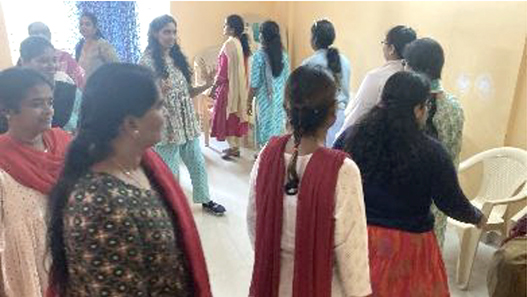
Dream School Visualisation Activity
Teachers were divided into four to five groups and guided through a visualisation exercise where they imagined their "Dream School". Each group then prepared a short presentation expressing:
- The kind of environment they wished to create
- How students and teachers would feel in that space
- What values would be visibly lived and practiced
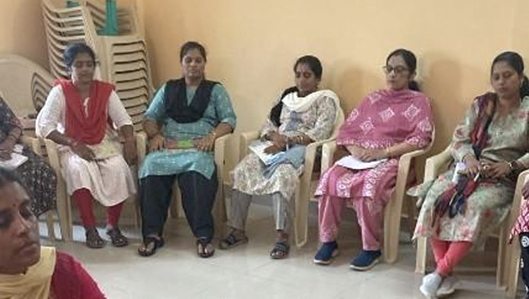
This activity helped teachers move beyond current limitations and reconnect with their deeper intentions as educators.
Outcomes observed:
- High engagement and openness among teachers
- Increased awareness of personal value systems and habitual responses
- Recognition of fear-based control as the dominant existing approach
- Willingness to imagine and articulate an alternative, value-based environment
- A strong foundation laid for continued reflection and follow-up
* Session 2 - Deepening, Skills & Application (23rd August 2025)
The second sessionThe second session was designed as a continuation and deepening of the first session, focusing on implementation, skill-building, and expansion to students.
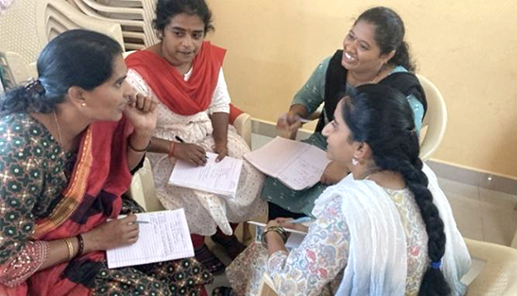
The session addressed four key elements:
1. Value awareness
Teachers reflected on the period following the first session, sharing:
- What values they attempted to implement
- Situations where their responses shifted
- Difficulties faced while moving away from fear-based practices
2. Creating Values
The focus was on intentionally creating a value-based atmosphere by addressing the core emotional needs of children:
- To feel loved
- To feel Valued
- To feel Understood
- To feel Respected
- To feel Safe
Teachers explored how meeting these needs supports positive behaviour and emotional regulation.
3. Skills Building
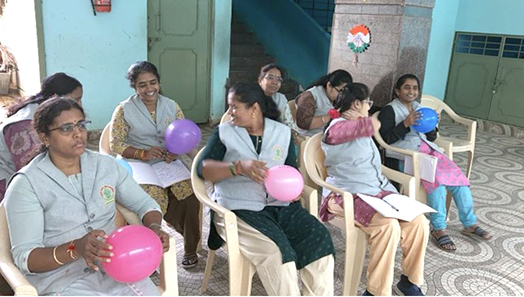
Three essential skills were explored to help translate values into daily classroom practice. Experiential activities, icebreakers, and the balloon activity were used to reinforce learning.
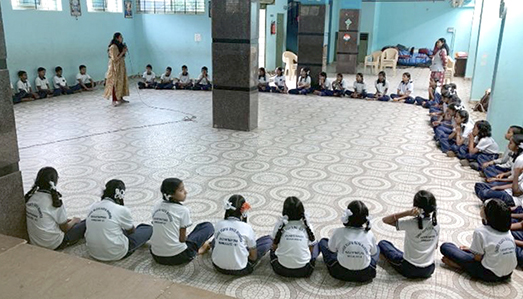
The session also included three student groups, where values were explored through age- appropriate experiential activities. Teachers observed how children responded when engaged in a safe, non-threatening environment. For the children's session we used 'Values that Ganesha teaches to talk about core values'. This was done to capitalize on the local culture & Ganesha Pooja festival mood during the time of the year.
4. Evaluation & Reflection
Participants reflected on:
- Changes observed since Session 1
- What felt effective and what remained challenging
- The need for sustained and frequent engagement
Outcomes observed:
- Increased clarity and confidence among teachers
- Early but visible shifts in mindset
- Strong engagement and positive response from students
- Realistic understanding that values-based change is gradual
4. Feedback / Evaluation
Teachers appreciated the non-judgmental and reflective space created during the sessions. Many shared that the workshops helped them pause and reconsider deeply ingrained practices.
It was openly acknowledged that while some improvement was visible, significant change would require:
- More frequent Living Values sessions
- Continued reflection and reinforcement
- Ongoing support and guidance
The sessions were viewed as a starting point, not a one-time solution.
5. Next Steps / Way Forward
As part of the follow-up, teachers were invited to:
- Consolidate and share practical classroom challenges and use cases they face on a day-to-day basis
- Highlight specific behavioural, emotional, or contextual difficulties
These inputs will help Living Values India:
- Review the challenges in depth
- Suggest alternate values-based methodologies
- Offer appropriate tools, strategies, or expert guidance where required.
This collaborative approach ensures that Living Values implementation remains contextual, practical, and supportive, rather than prescriptive.
6. Closing Reflection
From the facilitator's perspective, the sessions highlighted both the urgency and complexity of shifting from fear-based discipline to a values-based approach. While the changes observed were gradual, the willingness of teachers to reflect, imagine alternatives, and engage sincerely marked a meaningful first step.
With continued and sustained Living Values engagement, the school has strong potential to nurture a more compassionate, respectful, and value-driven environment that supports the long-term character development of its students.
________________________________